

Who remembers the Arab Spring?
Today’s podcast is about the differences between Yemen in 2026 and Syria in 2024. The desperate hope that the Ansarallah (Houthi) government is about to fall like Syria’s Assad, or the more logical suspicion that the anti-Houthi remnants might fall like Assad are both incorrect.
The two countries do have something in common though. Both their tragedies were dramatically accelerated by the Arab Spring. The 15th anniversary of that region wide uprising came and went with little fanfare at the beginning of 2026. The last democratic legacy of the revolutions, Tunisia’s, collapsed five years ago. To the extent that it is remembered at all, the Arab Spring is usually lamented.
I may be the last person who thinks it was a good idea.
You can listen to today’s podcast episode, which demolishes the silly parallel between Syria 2024 and Yemen 2026 that the Axis of Epstein has been pushing. Or you can read on to see me attempt to make the case for the Arab Spring.
The Arab Spring Isn’t Over Yet
On December 17, 2010 Mohamed Bouazizi set himself on fire in Tunisia. Bouazizi’s desperate act to protest corruption and governmental impunity set the region aflame. Protests spread across the Middle East and Africa. Tunisia’s dictator Ben Ali fled the country on January 14th, 2011, launching a decade long experiment in democracy that unfortunately culminated in renewed dictatorship. Tunisia’s elected president Kais Saied dismissed the parliament in July 2021. The developments in this country of 10 million are easy to ignore. What happened in Egypt, a country of over 100 million was impossible to ignore.
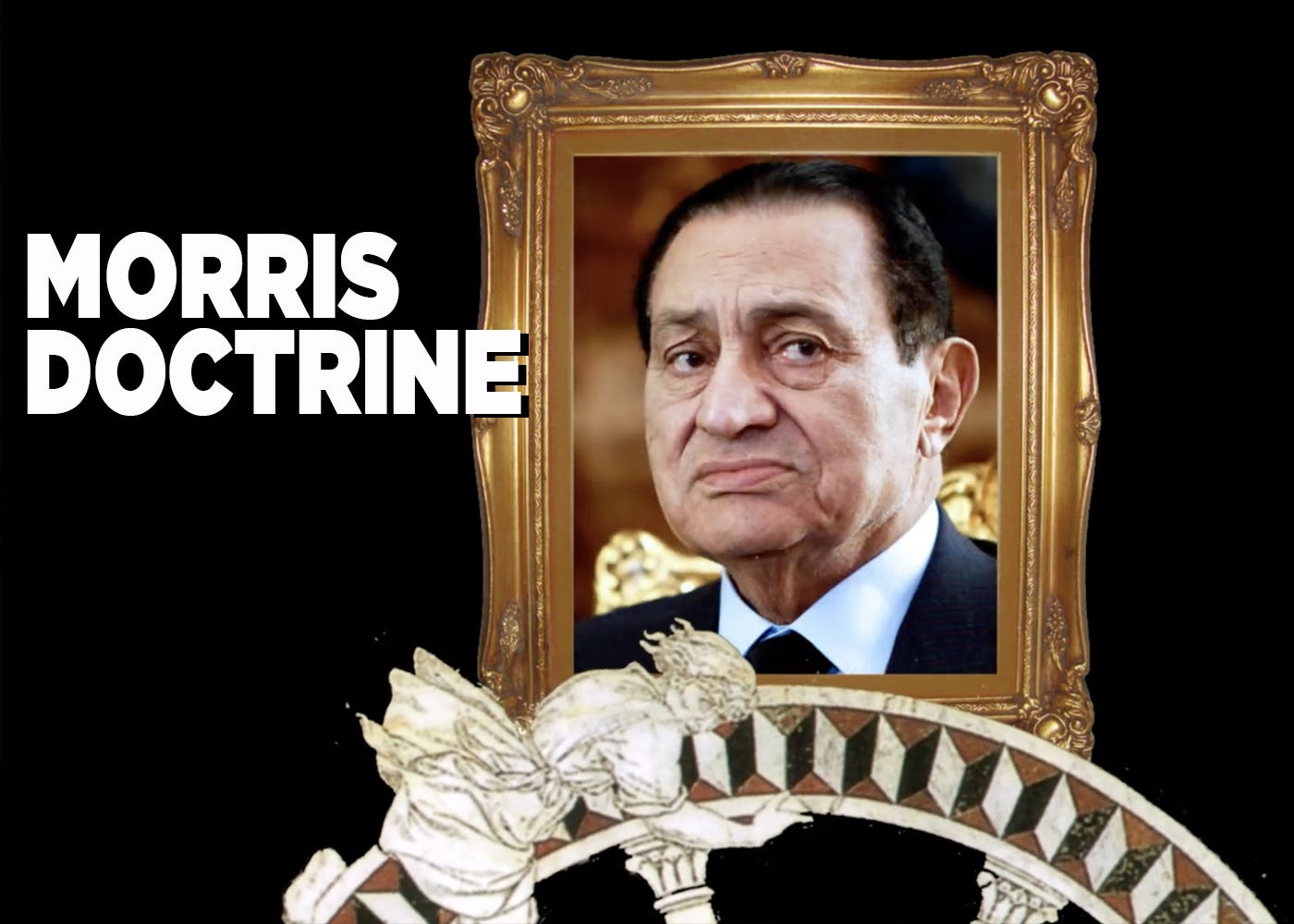
On February 11, 2011, Egyptian president Hosni Mubarak fled the country. The country’s first democratically elected head of state was thrown out much more quickly than in Tunisia. Heavy funding from Gulf Monarchies wanting to prove that Arab Democracy was impossible ensured the quick fall of Egyptian President Mohamed Morsi, in July of 2013. Morsi eventually died in Prison.
Gulf and US supported Dictator Abdel Fattah El-Sisi came to power with massacres of protesters that exceeded those carried out by Syria’s Assad at the time. But Sisi had the favor of the US and the Gulf, so he was able to quickly consolidate his power and he’s still running Egypt today.
As grim as that all is, Egypt and Tunisia are probably the happiest stories of the Arab Spring. Every Arab country was effected. The Saudis straight up invaded Bahrain to crush its revolution in March of 2011. Every country dealt with protests, and there probably would have been more serious moves towards democracy in countries with rubber-stamp parliaments if it wasn’t for Gulf influence.
The worst development in the Arab Spring was probably the US national security state’s decision that it deserved to get something out of the Arab Spring. The US puppets in Tunisia and Egypt had fallen with ridiculous speed. Shouldn’t the US be able to take out some long-standing regional enemies as well? Couldn’t it be that all Arab dictators were weak and illegitimate, not just the US-supported ones? The US poured billions, and tens of billions from the Gulf into trying to answer that question in a way we liked.
Turns out it was just the US-supported dictators that were weak. It took 13 horrific years to oust Assad and return the country to stability. Thanks to a lot of NATO bombing, Gaddafi was murdered in the streets after a mere 10 months of fighting. But his country, Libya, has never been knit back together.
A briefly celebrated “second Arab Spring” in 2019 isn’t well thought of either. The fall of two more dictators led to renewed oligarchy in Algeria, and an apocalypse in Sudan, as the fallen dictator’s lieutenants continue to battle over the wreckage.
No country in the region is more democratic than it was in 2011. The Arab Spring + the US War on Terror has led to millions of deaths. Prior to 2011, there were at least some stable dictatorships that had enough financial self-sufficiency to pretend to policies that were (not very) independent of the United States. In 2026, the countries in the region that are peaceful and stable are more or less owned and operated by the Gulf monarchies. And the number of countries in the region that are peaceful and stable are diminishing by the day.
Why The Arab Spring Was A Good Thing
So after that depressing survey of the results, how can I claim that the Arab Spring is still a good thing? I laid out the case just a few years after the initial events, in 2014, when most had already condemned the Arab Spring.
I am still quite proud of this little 2 minute video, and I stand by it. Human progress isn’t pretty. Political evolution has often been a one step forward, two steps backwards kind of thing. After years of the French Revolution and Napoleon, France found itself back with a succession of kings and emperors. But eventually, 82 years after the 1789 start of the Revolution, France ended up with a stable democracy.
The video above went with the French Revolution as a parallel because the story is more widely known. The analogy that probably makes the most sense for the Arab Spring would be Europe’s many revolutions in 1848. The “Springtime of Peoples” saw a similar region-wide uprising, as France, Hungary, and multiple jurisdictions within the not yet unified Italy and Germany overthrew their systems. Within a year or two all of the 1848 revolutions had been brutally crushed by the old monarchical system. The role of Saudi Arabia and the United Arab Emirates today was played by Tsarist Russia back in 1848.
But the 1848 revolutions ended up successful in the long run. They were a crucial step on the journey to both Italian and German unification. In 1867 the Hungarians that had been crushed by Russian armies in 1849 were able to assert their autonomy against the Austrians, creating a dual monarchy that made them equal partners in what then became as Austria-Hungary. France’s journey towards representative democracy still had to travel through another empire and military defeat, but it’s not clear they would have made it to a stable republic without the 1848 rising.
Nobody today sees 1848 as a failure. But it took 15-20 years for a single positive result to come from those European risings. We’re about 15 years out from the Arab Spring’s beginning now. The Middle East looks like a chaotic mess today, with war between Iran and the US making things infinitely worse. But similar sorts of chaos in Europe made it possible for the dreams of 1848 to reach fruition later in the century. I think it’s very possible that the Arab Spring will find itself similarly redeemed.
Maybe sooner than most suspect.
You can listen to today’s podcast on Spotify, or you can watch it on YouTube below.