

Monarchy is dumb. It’s an outmoded, inefficient and dangerous way to organize a country. It has survived in a number of places for historical and constitutional reasons. If it’s carefully managed, and doesn’t do much, I don’t like it, but I suppose you can argue that constitutional monarchy is harmless or even benign.
Absolute monarchy is an absurdity. It’s offensive to any sensible conception of modernity, and the spirit of the Enlightenment and the US Constitution most of all. It lends itself to capricious abuse of power by definition, and is a recipe for corruption and failure in the handful of places that have been forced to hold onto it, mostly by overseas imperial masters. Absolute monarchy almost exclusively survives in the Persian Gulf, and the region is much worse off because of it.
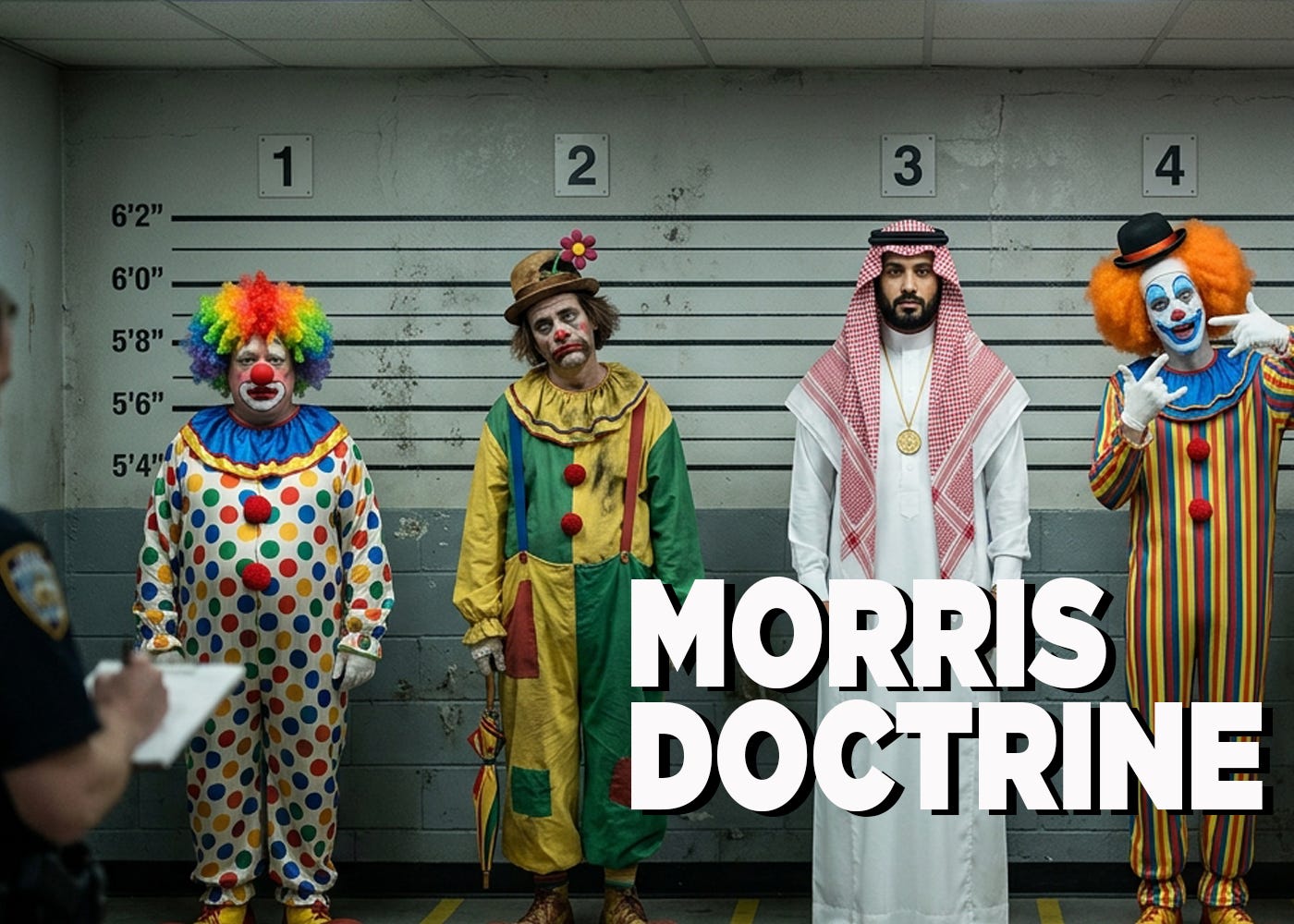
Today’s podcast covers Saudi Arabia’s choice to renew conflict with Yemen. The dramatic events at the beginning of the month, so dramatic I went live to cover them, seem to have slowed. Saudi Arabia’s proxy forces in Yemen have lost some strategically vital territory, and a choke point on the Red Sea, but things may have stabilized. There’s a lot of history here: in the months of Trump’s war; the eleven years since Saudi Arabia invaded Yemen in 2015; and the two decades in which Saudi Arabia and Yemen’s old dictator’s oppression gave rise to the Houthis. Today’s podcast provides a great refresher on all of that. But there’s an underlying question we often don’t get to. The absurd nature of Saudi Arabia’s government is at the root of this whole mess. Listen to today’s episode on Spotify below or read on to hear more about the absurdity of Saudi Arabia and absolute monarchy…
Constitutional Is OK, I Guess…
I’m a pretty confirmed (small-r) republican. Monarchy strikes me as distasteful everywhere. If I live to see the end of the British monarchy I’ll be happy about it. Monarchs and aristocracies have clashed across history, but the two organizing principles feel the same to me. Putting one person above another purely for reasons of birth is wrong. I’m well aware that the UK’s ancient and unwritten constitution doesn’t work without the accretion of goofy offices and traditions that surround it. I just don’t see why they can’t move on. There have been plenty of other goofy traditions the British have discarded.
But at the end of the day, Britain, Japan, Thailand, and the many other constitutional monarchies in the world aren’t my countries. A lot of folks have real affection for their royal families, and can point to positive influence that their kings and queens have had in times of crisis. The three countries listed above, and almost every monarchy that still exists, is rigidly confined within law, tradition and public opinion. Juan Carlos I, the once beloved king of Spain, who played a key role in the country’s transition to prosperous democracy in the 1970s and 1980s, felt compelled to resign in 2014 in part because of corruption allegations.
That’s how things should go. That’s not how things go with the absolute monarchies of the Persian Gulf.
A Persian Gulf Problem
Absolute Monarchy is a comically dumb way to organize a polity. Spain’s Juan Carlos also resigned because of age and illness. Saudi Arabia has been ruled by a succession of stroke victims for decades, the aging sons of the country’s founder Ibn Saud, who died all the way back in 1953. MBS is technically just the Crown Prince, allowed to exercise absolute power because his father King Salman was already impaired by age when he came to power in 2015.
Those who do not know the region are always confused when Saudi Arabia fails miserably at some military task. Isn’t it one of the most expensive militaries in the world? Don’t they have all the top shelf US equipment? Those who know the region are well aware that the Saudi military is INTENTIONALLY weak. Countries like Iraq and Egypt experienced military coups against far less absolute rulers in Iraq and Egypt in the 1950s so the Sauds committed to never allowing the military to accumulate the power necessary to compete with the royal family.
Absolute power leads to intentionally perverse results like that, because its priority is the power, not the people. Absolute Monarchy is an incredibly weak system, which is the reason why it survives in the Persian Gulf and almost nowhere else.
Every single absolute monarchy in the world is a remnant of the British Empire. The only ones that exist outside of the Gulf are Eswatini and Brunei. The British monarchy has almost always been limited in some way, certainly since the British system became powerful enough for global empire. They only imposed unlimited Monarchy on places they wanted to keep as weak as possible. Eswatini to act as a spoiler in South Africa, and Brunei for largely the same reason all the Gulf monarchies were created, “Divide and Conquer”.
The British wanted to make sure that larger Arab or Turkish populations did not control vital shipping routes, so they set up or preserved absolute monarchies in port cities. Britain maintained these sorts of relationships everywhere they could. Vain, stupid kings could be easily bribed and controlled. On the rare occasions when one of these rulers proved to be visionary or competent in any independent way, they would quickly be replaced. Before India won its independence there were over 500 petty principalities, ranging from semi-constitutional to absolute, littering the sub-continent.
When India and Pakistan became independent, and wanted self-respect and competence in their leaders, they swiftly abolished all of the monarchies that existed within their territory. They did so with the approbation of almost every country on the planet.
The Persian Gulf’s great misfortune was oil. The new US world boss became just as interested in shielding petroleum resources from the Arab masses as the British were in carving off ports. So absolute monarchy, the perfect backward tool of imperial control, was preserved in the Persian Gulf and almost nowhere else.
It’s not surprising that the Sultanate of Brunei, the only absolute monarchy left in South East Asia, is very oil rich. By keeping it as an independent country, instead allowing it to be folded into Malaysia or Indonesia like all of the other petty sultanates, the British and the US kept it independent. It’s much easier to get rich drilling oil in a territory when there’s a bribe-able monarch and a public of only 500,000 to keep pacified. The parallels between Brunei, the UAE, Bahrain, Kuwait and Qatar should be obvious here. Saudi Arabia is unique among absolute monarchies in having a significant population, which leads to some nuance I laid out in this article.
Un-American Affairs
I take US history and the country’s founding principles pretty seriously. It got diluted and diverted in the fight against Communism, but I’m not sure if there’s a more foundational principle in United States History than hating on monarchies. It’s all over our Declaration of Independence. Avoiding a fall back into monarchy was one of the main preoccupations of the drafters of the US Constitution. Throughout the 19th century the US public saw itself as the protector and inspirer of revolutions against monarchy around the world, including against many monarchs that were far more representative than the Saudis or the Emiratis. New York City’s parks are littered with monuments to anti-monarchical revolution.
It’s offensive to me that for the past half century or so we’ve turned our back against that tradition to defend Saudi Arabia, the UAE and its ilk. Maybe there was an argument to be made for these relationships during the competition of the Cold War, but in the 1990s we should have encouraged them to go the way of Mobutu Sese Seko, the Contras and other disreputable anti-Communist proxy forces. But for the benefit of a few oil & defense companies, and one out of control trillion dollar luxury machine for failed wars, CENTCOM, we let this absurdity continue.
We really shouldn’t.
You can listen to today’s episode on Spotify or watch it on YouTube below.
Vis-a-vis visionary and competent independent minded monarchs, Saqr bin Sultan Al Qasimi the former emir of Sharjah in the what would become the UAE was an ardent Nasserite and socialist who wanted to abolish the emirates and have Sharjah along with the other emirates and Arab monarchies join Egypt Under Nasser. He was removed by the British with help from Sheikh Zayed the father of MBZ.
Agree on all points except you pining KSA's military incompetence on the monarchic nature of the state. Arab state militaries are rarely in their best conditions regardless of the type of government; the Lebanese army is a joke compared to HizbAllah, the Sudanese army can barely compete against the RSF, both Libyan governments are not known for military cohesiveness and are both reliant on mercenaries and foreign patrons, etc etc.